



AIR VELOCITY TRANSMITTER
Model
:
Y-AVT-01
Type
:
Duct
Display
:
–
Aplication
- Explosion Proof Areas
- HVAC Ducts
- Process Control
- Clean Room and Laboraties
- Pharmaceutical Manufacturing

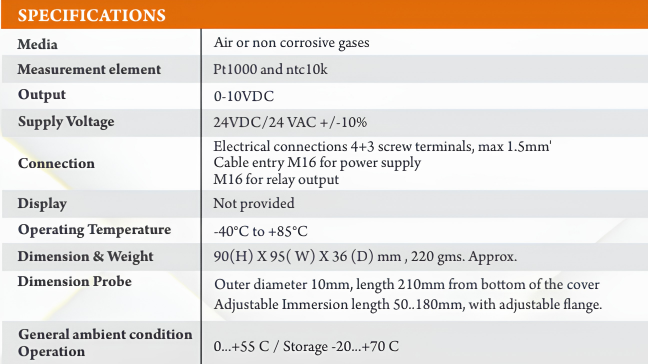
Specification
Ordering Guide
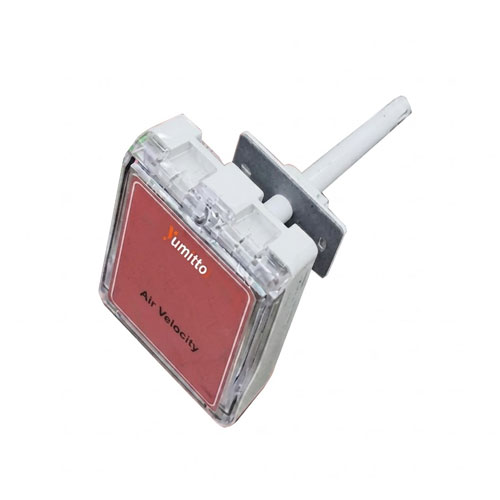
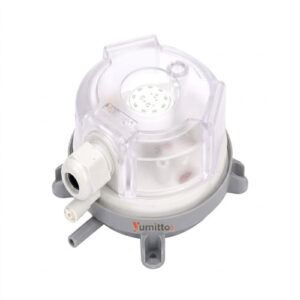
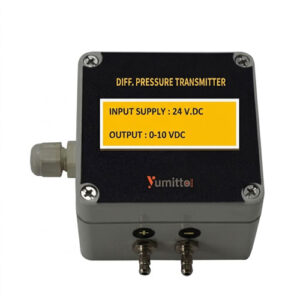
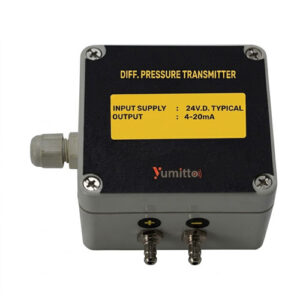
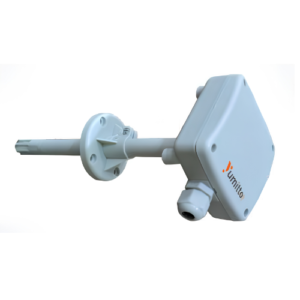
Air Velocity Transmitter: Complete Guide for Accurate Airflow Monitoring
An Air Velocity Transmitter is an important measurement device used to detect, measure, and transmit the velocity of moving air in HVAC systems, ventilation networks, cleanrooms, laboratories, manufacturing facilities, and industrial environments. By continuously monitoring air movement, an Air Velocity Transmitter helps users maintain proper ventilation, improve indoor air quality, support energy-efficient HVAC operation, and maintain controlled environmental conditions. Modern transmitters can provide reliable measurement signals to building management systems, automation controllers, data acquisition systems, and other monitoring equipment, making them valuable for applications where consistent airflow information is required.
Air Velocity Transmitter
- An Air Velocity Transmitter measures the speed of moving air and converts the measured value into a usable electrical output signal.
- The device is commonly integrated with HVAC automation, ventilation control, industrial process monitoring, and environmental monitoring systems.
- An Air Velocity Transmitter can help operators identify insufficient airflow, excessive airflow, ventilation imbalance, or changes in operating conditions.
- Depending on the model, the transmitter may provide analog outputs, digital communication, display functions, alarm functions, or other integration options.
- The Air Velocity Transmitter can be installed in ducts, ventilation systems, air-handling equipment, and other locations where air velocity needs to be monitored.
- Accurate air velocity information can help improve system control and support consistent operating conditions.
- Industrial users can use an Air Velocity Transmitter to continuously observe airflow conditions instead of depending only on manual measurements.
Air Velocity Sensor
- An Air Velocity Sensor is the sensing component used to detect the movement or speed of air.
- Sensors may use different measurement technologies depending on the application, required accuracy, air conditions, and installation environment.
- An Air Velocity Sensor can be used in HVAC ducts, cleanroom systems, laboratories, exhaust systems, and industrial ventilation equipment.
- The sensor provides measurement information that can be processed by a transmitter or monitoring controller.
- Selecting the appropriate Air Velocity Sensor is important for achieving dependable measurement performance.
- Factors such as air temperature, humidity, contamination, velocity range, and installation location should be considered.
- A properly selected sensor can provide stable airflow information for continuous monitoring applications.
Air Velocity Monitor
- An Air Velocity Monitor is used to observe air velocity readings continuously or periodically.
- It can help facility operators understand whether airflow is operating within the desired range.
- An Air Velocity Monitor may be used alongside an Air Velocity Transmitter in automated monitoring applications.
- Monitoring air velocity can help identify ventilation problems before they significantly affect system performance.
- Digital displays can make readings easier for operators to observe locally.
- Some monitoring systems can also provide alarms when measured airflow falls outside configured limits.
- Air velocity monitoring is particularly useful in controlled environments where airflow consistency is important.
Air Velocity Meter
- An Air Velocity Meter is generally used to measure the speed of air at a particular location.
- Portable meters are useful for commissioning, inspection, troubleshooting, and maintenance activities.
- A fixed Air Velocity Transmitter, in contrast, is designed for continuous measurement and integration with control systems.
- An Air Velocity Meter can be used to verify airflow conditions during HVAC testing and balancing.
- Technicians can compare field measurements with readings from installed transmitters.
- This comparison can help identify sensor placement issues, calibration requirements, or airflow distribution problems.
- Both portable meters and fixed transmitters have important roles in professional airflow measurement.
Air Velocity Measurement
- Air Velocity Measurement is the process of determining how quickly air moves through a particular area or system.
- Accurate measurement is important for HVAC design, ventilation control, cleanroom management, and industrial process applications.
- An Air Velocity Transmitter provides continuous measurement data that can be used by automation systems.
- Air velocity information can support airflow balancing and ventilation optimization.
- Measurement requirements depend on the application, velocity range, environmental conditions, and required accuracy.
- Sensor location is also important because turbulence, bends, dampers, filters, and obstructions can affect airflow.
- Reliable Air Velocity Measurement can contribute to better system performance and operational control.
Air Flow Transmitter
- An Air Flow Transmitter is designed to provide information related to the movement of air through a system.
- Depending on the design, airflow can be evaluated using velocity, pressure, duct dimensions, or other measurement parameters.
- An Air Velocity Transmitter may be used as part of an airflow monitoring solution where velocity is the primary measurement.
- Airflow transmitters are commonly associated with HVAC systems, air-handling units, exhaust systems, and industrial ventilation.
- The output can be connected to controllers, building management systems, or monitoring equipment.
- Continuous airflow information can support automatic fan control and ventilation management.
- Selecting the appropriate transmitter depends on the measurement range and system requirements.
Air Flow Sensor
- An Air Flow Sensor detects air movement and provides information required for airflow monitoring.
- Sensors can be installed in ducts, equipment, ventilation channels, and other airflow paths.
- An Air Flow Sensor may work together with a transmitter to convert the sensed condition into a standardized output.
- Sensor selection should consider the expected airflow range and operating environment.
- Industrial applications may require sensors capable of handling dust, temperature variation, or other environmental factors.
- HVAC applications generally require dependable measurement for maintaining ventilation performance.
- Regular inspection and suitable installation can support long-term measurement reliability.
Air Speed Transmitter
- An Air Speed Transmitter measures air speed and converts the measurement into a signal suitable for monitoring or control.
- The terminology may overlap with air velocity transmitter depending on the manufacturer and application.
- An Air Velocity Transmitter is often selected when accurate and continuous air movement information is required.
- Air speed measurement can be useful in ventilation ducts, cleanrooms, laboratories, and industrial environments.
- Output signals may allow integration with automation systems.
- Local display options can provide convenient access to real-time readings.
- The correct transmitter should be selected according to the required measurement range, output type, and installation conditions.
Air Velocity Indicator
- An Air Velocity Indicator provides a visual representation of measured air velocity.
- Indicators can be useful when operators need to check airflow conditions directly at the installation point.
- An Air Velocity Indicator may be combined with an Air Velocity Transmitter to provide both local indication and remote monitoring.
- Digital indicators can improve readability compared with traditional mechanical measurement methods.
- Some systems allow users to configure alarm thresholds for abnormal airflow conditions.
- Local indication can simplify routine inspections and troubleshooting.
- Indicators are particularly useful in applications where operators frequently need to verify airflow status.
Air Velocity Detector
- An Air Velocity Detector identifies or measures the movement of air in a specific area or airflow path.
- It can support ventilation monitoring and airflow-related safety or process requirements.
- An Air Velocity Detector may be integrated with a transmitter or controller for continuous monitoring.
- Detecting changes in airflow can help operators identify potential system problems.
- Applications may include HVAC ducts, industrial exhaust systems, cleanrooms, and ventilation equipment.
- Proper positioning is important to ensure that the detector receives representative airflow.
- Routine maintenance can help maintain dependable detection and measurement performance.
Buy air velocity transmitter
- Before deciding to Buy air velocity transmitter, identify the required measurement range and application.
- Determine whether the device will be installed in an HVAC duct, cleanroom, laboratory, or industrial environment.
- Check the required output signal and communication compatibility with the existing control system.
- Consider whether a local display is required for on-site monitoring.
- Verify the environmental specifications before purchasing.
- Installation dimensions and mounting requirements should also be reviewed.
- Choosing an appropriate Air Velocity Transmitter can help provide reliable long-term airflow monitoring.
Air velocity transmitter manufacturer
- An Air velocity transmitter manufacturer develops and produces transmitters designed for different airflow monitoring requirements.
- When evaluating a manufacturer, consider product specifications, technical documentation, application support, and manufacturing capabilities.
- A reliable manufacturer should provide clear information about measurement range, accuracy, output, operating conditions, and installation.
- Product consistency is particularly important when transmitters are required across multiple facilities.
- An Air Velocity Transmitter manufacturer may offer different configurations for HVAC, cleanroom, laboratory, and industrial applications.
- Technical support can also be valuable during installation and commissioning.
- Buyers should compare product specifications with actual project requirements rather than selecting equipment based only on price.
Air velocity transmitter supplier
- An Air velocity transmitter supplier provides access to transmitters and related airflow measurement equipment.
- Suppliers can help customers identify suitable configurations based on application requirements.
- A professional supplier should provide product specifications and relevant technical information.
- Availability, delivery requirements, after-sales support, and product compatibility can also be considered.
- An Air Velocity Transmitter supplier may serve HVAC contractors, industrial companies, system integrators, laboratories, and facility management teams.
- Customers should confirm the required range and output before placing an order.
- Technical consultation can simplify product selection for specialized applications.
Air velocity transmitter for HVAC
- An Air velocity transmitter for HVAC is used to monitor air movement within heating, ventilation, and air-conditioning systems.
- HVAC applications can include supply ducts, return ducts, air-handling units, ventilation systems, and exhaust networks.
- An Air Velocity Transmitter can provide continuous airflow information for HVAC control systems.
- Monitoring air velocity can help operators identify airflow changes caused by blocked filters, fan performance changes, or system adjustments.
- The measurement can be integrated into building automation systems.
- Continuous monitoring can support more efficient HVAC management.
- Proper installation and sensor positioning are important for representative measurements.
Air velocity transmitter for ventilation systems
- An Air velocity transmitter for ventilation systems helps monitor air movement through ventilation ducts and air distribution networks.
- Proper airflow is important for maintaining effective ventilation.
- An Air Velocity Transmitter can provide continuous readings to a central monitoring or control system.
- Ventilation monitoring can be useful in commercial buildings, industrial facilities, laboratories, and institutional environments.
- Abnormal airflow readings can alert operators to potential ventilation issues.
- The transmitter can also support commissioning and ongoing maintenance activities.
- Selecting the appropriate measurement range helps prevent inaccurate readings and unnecessary equipment replacement.
Air velocity transmitter for cleanrooms
- An Air velocity transmitter for cleanrooms is used where controlled airflow conditions are required.
- Cleanrooms often require consistent airflow to support environmental control and process requirements.
- An Air Velocity Transmitter can continuously monitor air movement in cleanroom ventilation systems.
- Cleanroom applications may include pharmaceutical manufacturing, electronics production, laboratories, healthcare environments, and research facilities.
- Sensor placement should be carefully considered to obtain representative airflow readings.
- Measurement data can be connected to monitoring systems for continuous observation.
- Depending on the application, users should consider environmental compatibility, cleanliness requirements, accuracy, and calibration procedures.
Air velocity transmitter with display
- An Air velocity transmitter with display allows users to view measured air velocity locally.
- A display can simplify routine inspections because operators do not always need to access a remote control system.
- An Air Velocity Transmitter with a readable display can be useful in HVAC rooms, industrial plants, laboratories, and technical facilities.
- Digital displays can show real-time measurement values.
- Some configurations may also support configurable alarms or additional parameters.
- Local display functionality can reduce the time required for basic system checks.
- When selecting a display model, consider viewing angle, display size, environmental conditions, and installation location.
Air velocity transmitter with output
- An Air velocity transmitter with output can send measurement information to external controllers or monitoring systems.
- Common output requirements depend on the automation architecture and selected transmitter configuration.
- An Air Velocity Transmitter with a suitable output can integrate into building management and industrial control systems.
- Remote monitoring allows operators to view airflow conditions without physically visiting the measurement point.
- Output compatibility should be confirmed before installation.
- Signal requirements, wiring, communication protocols, and controller compatibility should be evaluated.
- Proper integration can make airflow monitoring more useful for automated system management.
Air velocity transmitter for industrial applications
- An Air velocity transmitter for industrial applications is designed for continuous airflow monitoring in demanding environments.
- Industrial applications may include manufacturing plants, process facilities, exhaust systems, warehouses, workshops, and production areas.
- An Air Velocity Transmitter can help monitor ventilation and process-related airflow.
- Continuous monitoring may help identify changes in fan performance, duct conditions, or ventilation efficiency.
- Industrial users should consider temperature, humidity, dust, vibration, and other environmental conditions.
- The required enclosure and installation arrangement should match the application.
- Regular calibration and maintenance can support dependable measurement performance.
Air velocity transmitter price in India
- Air velocity transmitter price in India can vary depending on specifications, measurement range, accuracy, output, display options, communication features, and application requirements.
- Different technologies and configurations can result in different equipment costs.
- An Air Velocity Transmitter with additional features may have a different price from a basic measurement model.
- Installation accessories and integration requirements can also affect the overall project cost.
- Buyers should compare technical specifications rather than focusing only on the initial purchase price.
- Warranty, technical support, calibration, and product availability may also influence the total cost of ownership.
- For accurate pricing, customers should provide application details and required specifications to the supplier.
Air velocity transmitter supplier in India
- An Air velocity transmitter supplier in India can provide airflow measurement products for commercial, HVAC, cleanroom, and industrial applications.
- Indian suppliers may serve customers across multiple regions and industries.
- When selecting a supplier, review product specifications, availability, support, and delivery requirements.
- A dependable Air Velocity Transmitter supplier should be able to explain the differences between available models.
- Technical assistance can be useful when selecting measurement range and output configuration.
- Customers should also confirm installation requirements before ordering.
- Nationwide supply capability can be particularly useful for projects involving multiple sites.
Air velocity transmitter manufacturer in India
- An Air velocity transmitter manufacturer in India can develop and supply products for domestic HVAC and industrial applications.
- Manufacturers may offer different configurations based on measurement requirements.
- When selecting a manufacturer, review product documentation and technical specifications.
- Manufacturing capability can be important when customers require consistent products for multiple installations.
- An Air Velocity Transmitter manufacturer may also provide customization or application-specific configurations depending on the product range.
- Technical support can help with installation, commissioning, and troubleshooting.
- Customers should evaluate the product based on application suitability and documented specifications.
Air velocity transmitter dealer in India
- An Air velocity transmitter dealer in India can help customers source airflow measurement equipment locally.
- Dealers may support purchasing, product availability, and basic application guidance.
- A dealer can be useful when customers require quick access to measurement products or replacement units.
- Before purchasing, verify the exact model, measurement range, output, and accessories.
- An Air Velocity Transmitter dealer should provide clear product information and commercial details.
- Buyers can also ask about warranty and technical support.
- Choosing the correct product configuration is more important than simply selecting the lowest-cost option.
Air velocity transmitter price in India
- When comparing Air velocity transmitter price in India, buyers should consider the complete specification of each product.
- Two transmitters may have different prices because they use different sensing technologies or provide different features.
- An Air Velocity Transmitter intended for a cleanroom or industrial environment may have different specifications from a basic HVAC model.
- Display functionality, output options, accuracy, measurement range, and enclosure requirements can influence pricing.
- Installation and commissioning costs should also be considered for complete project budgeting.
- Buyers should request a detailed quotation based on the actual application.
- Comparing products on technical specifications helps ensure that the selected transmitter meets the intended requirements.
Buy air velocity transmitter online India
- Customers looking to Buy air velocity transmitter online India should first verify the product specifications.
- Check the measurement range, accuracy, output, display, operating temperature, and mounting arrangement.
- Confirm that the transmitter is appropriate for the intended HVAC, ventilation, cleanroom, or industrial application.
- Review product documentation before placing an online order.
- An Air Velocity Transmitter purchased online should match the requirements of the existing monitoring or control system.
- Customers should also confirm warranty, delivery information, and technical support availability.
- Buying from a reliable supplier can simplify product selection and after-sales assistance.
How Does an Air Velocity Transmitter Work?
- An Air Velocity Transmitter uses a sensing mechanism to determine the velocity of moving air.
- The sensor detects airflow-related changes and the internal electronics process the measurement.
- The transmitter then converts the measurement into an appropriate output for monitoring or control.
- Depending on the model, the output may be connected to HVAC controllers, PLCs, building management systems, data loggers, or other automation equipment.
- Some transmitters include a local display for convenient monitoring.
- The measurement process is designed for continuous operation in applications where airflow conditions need to be observed regularly.
- Correct installation is essential because turbulence and poor sensor positioning can influence measurement accuracy.
Key Benefits of Using an Air Velocity Transmitter
- Continuous monitoring: Provides ongoing information about airflow conditions.
- Automation compatibility: Can be integrated into HVAC and industrial control systems.
- Improved visibility: Allows operators to identify changes in airflow.
- Remote monitoring: Output signals can be connected to centralized systems.
- HVAC optimization: Supports ventilation and air distribution management.
- Cleanroom monitoring: Helps observe controlled airflow conditions.
- Industrial suitability: Can be used across various industrial ventilation applications.
- Maintenance support: Changes in airflow can provide useful information during troubleshooting.
- Operational efficiency: Accurate measurement can support better system management.
- Flexible installation: Different configurations are available for different applications.
Applications of Air Velocity Transmitter
- HVAC supply and return air ducts.
- Commercial building ventilation systems.
- Air-handling units.
- Industrial exhaust systems.
- Manufacturing facilities.
- Pharmaceutical production areas.
- Electronics manufacturing environments.
- Laboratories and research facilities.
- Cleanroom ventilation systems.
- Warehouse ventilation.
- Process air systems.
- Industrial air monitoring systems.
- Building automation systems.
- Environmental monitoring applications.
Factors to Consider Before Selecting an Air Velocity Transmitter
- Measurement range: Select a range suitable for expected airflow conditions.
- Accuracy: Determine the accuracy required by the application.
- Output: Check compatibility with the existing controller or monitoring system.
- Display: Decide whether local indication is necessary.
- Installation: Confirm mounting dimensions and sensor positioning requirements.
- Environment: Consider temperature, humidity, dust, vibration, and other conditions.
- Application: Select a model designed for HVAC, cleanroom, laboratory, or industrial requirements.
- Maintenance: Review calibration and maintenance requirements.
- Integration: Confirm compatibility with the building or industrial automation system.
- Support: Consider technical assistance, documentation, warranty, and product availability.
Installation and Maintenance of Air Velocity Transmitter
- Install the transmitter according to the manufacturer’s recommended mounting procedure.
- Position the sensing element where airflow is representative of the system being measured.
- Avoid locations immediately after sharp bends, dampers, fans, or other sources of excessive turbulence when possible.
- Ensure that electrical connections are correctly installed.
- Verify the output signal after installation.
- Compare readings with an appropriate reference instrument during commissioning when required.
- Keep sensing components clean when the application environment contains dust or contaminants.
- Schedule calibration according to application requirements and operating conditions.
- Inspect wiring and mounting periodically.
- Record maintenance and calibration information for critical applications.
Why Choose Yumitto for Air Velocity Measurement Solutions?
- Yumitto provides solutions designed to support industrial and HVAC measurement requirements.
- Customers can discuss their application requirements before selecting an Air Velocity Transmitter.
- Yumitto can help users identify suitable measurement configurations based on application needs.
- Product selection can be matched to requirements such as HVAC monitoring, ventilation systems, cleanrooms, and industrial applications.
- Customers can request technical information about measurement range, output, display, and installation.
- Reliable airflow measurement can help organizations improve monitoring and maintain better control over ventilation systems.
- For businesses looking for an Air Velocity Transmitter, Yumitto can be considered as a source for suitable measurement solutions.
Frequently Asked Questions
What is an Air Velocity Transmitter?
- An Air Velocity Transmitter is a device that measures the speed of moving air and converts the measurement into an output signal for monitoring or control.
- It is commonly used in HVAC, ventilation, cleanrooms, laboratories, and industrial applications.
Where is an Air Velocity Transmitter used?
- An Air Velocity Transmitter can be used in HVAC ducts, ventilation systems, air-handling units, cleanrooms, laboratories, industrial exhaust systems, and manufacturing facilities.
- The exact model should be selected according to the application requirements.
What is the difference between an Air Velocity Sensor and transmitter?
- An Air Velocity Sensor detects the movement or velocity of air.
- A transmitter processes the sensor measurement and provides a usable output signal for monitoring or control.
- In many integrated products, the sensor and transmitter are incorporated into one device.
Why is air velocity measurement important in HVAC?
- Air velocity measurement helps operators understand airflow conditions within HVAC and ventilation systems.
- An Air Velocity Transmitter can provide continuous information that supports airflow monitoring, system balancing, and automation.
Can an Air Velocity Transmitter be used in cleanrooms?
- Yes, suitable models can be used for cleanroom airflow monitoring.
- The transmitter should be selected according to the cleanroom’s environmental, measurement, installation, and monitoring requirements.
Does an Air Velocity Transmitter support remote monitoring?
- Many transmitters can provide an output that connects to controllers, building management systems, PLCs, or other monitoring equipment.
- The exact communication capability depends on the selected model.
What affects air velocity transmitter price in India?
- Price can depend on measurement range, accuracy, sensing technology, output, display, enclosure, application requirements, and additional features.
- Customers should compare complete technical specifications when evaluating quotations.
How should an Air Velocity Transmitter be maintained?
- Maintenance may include inspection, cleaning where appropriate, wiring checks, performance verification, and calibration according to application requirements.
- Following manufacturer recommendations can help maintain measurement reliability.
Can an Air Velocity Transmitter be used for industrial applications?
- Yes, appropriate models can be used for industrial ventilation, manufacturing facilities, exhaust systems, process areas, and other industrial applications.
- Environmental conditions and measurement requirements should be considered during product selection.
How do I choose the right Air Velocity Transmitter?
- Determine the required measurement range, accuracy, installation method, operating environment, output, display requirements, and system compatibility.
- Discussing these requirements with a qualified supplier can help identify an appropriate configuration.
Get the Right Air Velocity Transmitter from Yumitto
- Accurate airflow information is important for HVAC control, ventilation management, cleanroom monitoring, and industrial operations.
- The right Air Velocity Transmitter can provide continuous measurement and useful output for modern monitoring and automation systems.
- Yumitto offers measurement solutions for customers looking for dependable airflow monitoring equipment.
- Contact Yumitto with your required application, measurement range, installation details, and output requirements.
- Choose a suitable Air Velocity Transmitter to support efficient airflow monitoring and better operational control.
- Connect with Yumitto today to discuss your air velocity measurement requirements and find a suitable solution for your application.