



DIFFERENTIAL PRESSURE CUM AIRFLOW TRANSMITTER
Model
:
YDPT-A
Type
:
Duct
Display
:
Display Available
Aplication
- Airflow Monuitoring
- In Duct Airflow Monitoring
- Variable Air Volume Monitoring Application
- Filter Monitoring

Specification

Ordering Guide

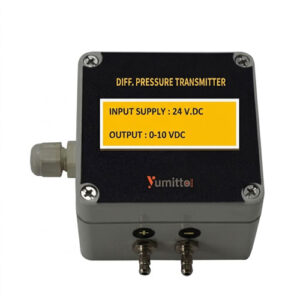
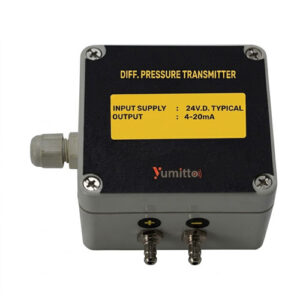


Differential Pressure Cum Airflow Transmitter: Complete Guide
A Differential Pressure Cum Airflow Transmitter is an important measurement and monitoring device used in HVAC systems, cleanrooms, ventilation systems, industrial facilities, and other applications where both differential pressure and airflow information are required. By combining pressure and airflow measurement capabilities in one instrument, a Differential Pressure Cum Airflow Transmitter can help users monitor air movement, pressure differences, ventilation performance, and system operating conditions more efficiently. This guide explains its working principle, applications, benefits, selection factors, installation considerations, and important purchasing information.
Differential Pressure Cum Airflow Transmitter
- A Differential Pressure Cum Airflow Transmitter is designed to measure differential pressure and provide airflow-related measurement from the same sensing system.
- It can be useful where air pressure and air movement need to be monitored together.
- The instrument can support HVAC monitoring, ventilation management, cleanroom applications, and industrial air-handling systems.
- A Differential Pressure Cum Airflow Transmitter can reduce the need for separate measurement instruments in suitable applications.
- It can provide useful measurement information for controlling and monitoring air-handling equipment.
- Depending on the model, outputs may be available for integration with building management systems, controllers, PLCs, or other monitoring equipment.
- A Differential Pressure Cum Airflow Transmitter can help operators identify changes in airflow or pressure conditions.
- The device can be selected according to the pressure range, airflow range, output type, display requirements, installation arrangement, and application environment.
- Proper selection helps ensure that the transmitter operates effectively within the intended measurement range.
- For modern HVAC and industrial monitoring requirements, a Differential Pressure Cum Airflow Transmitter provides a practical approach to combined measurement.
Differential Pressure Transmitter
- A Differential Pressure Transmitter measures the difference between pressure at two sensing points.
- The measured pressure difference can be used to understand the condition of filters, ducts, rooms, fans, and air-handling equipment.
- Differential pressure measurement is commonly used in HVAC and industrial air systems.
- A Differential Pressure Transmitter can provide an output signal that can be connected to a controller or monitoring system.
- It can help monitor whether pressure conditions remain within the desired operating range.
- Differential pressure information is particularly useful when monitoring air filters and room pressure relationships.
- When combined with airflow measurement, pressure information can provide a broader understanding of ventilation performance.
- A Differential Pressure Transmitter should be selected according to the expected pressure range and accuracy requirements.
- Correct tubing connections are important for obtaining reliable differential pressure readings.
- The transmitter should also be installed according to the manufacturer’s recommended orientation and environmental conditions.
Airflow Transmitter
- An Airflow Transmitter is designed to measure and transmit information related to the movement of air.
- Airflow measurement is important for ventilation, HVAC balancing, cleanroom monitoring, and industrial air systems.
- An Airflow Transmitter can provide a continuous signal representing measured airflow or a related airflow parameter.
- The output can be integrated into automation and control systems where supported.
- Airflow information can help operators understand whether ventilation equipment is operating as expected.
- An Airflow Transmitter can be used with air ducts, ventilation systems, air-handling units, and other applications.
- Selecting the correct measurement range is important because airflow conditions can vary significantly between applications.
- Installation should follow the recommended positioning and sensing arrangement.
- An Airflow Transmitter can be particularly useful when continuous monitoring is required instead of periodic manual measurements.
- Combined with differential pressure measurement, airflow data can provide more complete system information.
Airflow Sensor
- An Airflow Sensor detects and measures air movement within a system.
- It forms an important part of airflow monitoring equipment.
- An Airflow Sensor can be used in HVAC ducts, ventilation systems, industrial environments, and air-handling applications.
- Sensor technology may vary depending on the instrument design and measurement principle.
- The selected sensor should be appropriate for the expected airflow range and operating environment.
- An Airflow Sensor should be installed correctly to minimize measurement errors caused by unsuitable positioning.
- Air turbulence, installation conditions, duct geometry, and system configuration can affect measurement performance.
- Regular inspection can help maintain reliable measurement.
- An Airflow Sensor can provide the input required for continuous airflow monitoring.
- When incorporated into a Differential Pressure Cum Airflow Transmitter, the airflow sensing function works alongside pressure measurement.
Differential Pressure Sensor
- A Differential Pressure Sensor detects the pressure difference between two points.
- It is widely used in HVAC, filtration, ventilation, and industrial process applications.
- A Differential Pressure Sensor can help identify changes in pressure across filters, ducts, rooms, and other components.
- The sensor range should be selected according to the application’s expected pressure conditions.
- Incorrect range selection can reduce measurement usefulness.
- A Differential Pressure Sensor can be connected to electronic measurement and control systems depending on the transmitter design.
- Proper pressure-port connections are necessary for reliable operation.
- The sensor should be protected from environmental conditions that exceed its specified operating limits.
- Periodic checking can help identify tubing leaks, blockages, or other installation issues.
- In a Differential Pressure Cum Airflow Transmitter, the differential pressure sensing element contributes to combined monitoring capabilities.
Airflow Monitor
- An Airflow Monitor provides information about air movement within a ventilation or air-handling system.
- It can help operators observe airflow conditions continuously.
- An Airflow Monitor can be useful in HVAC systems where ventilation performance needs to be checked regularly.
- It can also support monitoring in cleanrooms, laboratories, industrial areas, and controlled environments.
- Airflow monitoring can help identify unusual operating conditions.
- Changes in airflow may indicate issues such as filter loading, fan performance changes, duct restrictions, or system imbalance.
- An Airflow Monitor may include a display or output depending on the selected model.
- Integration with control systems can provide additional monitoring and automation possibilities.
- The monitoring range should match the application’s expected airflow.
- A Differential Pressure Cum Airflow Transmitter can combine airflow monitoring with differential pressure information.
Pressure Transmitter
- A Pressure Transmitter converts a measured pressure condition into a usable signal for monitoring or control.
- Pressure transmitters are widely used in industrial and building automation systems.
- A Pressure Transmitter can support continuous measurement where pressure information is required.
- Differential pressure transmitters specifically measure the difference between two pressure points.
- Output options vary depending on product design and application requirements.
- A Pressure Transmitter should be selected based on measurement range, environmental conditions, output requirements, and installation needs.
- Correct wiring and connection are important for dependable operation.
- Pressure measurement can support preventive monitoring and system optimization.
- In air-handling applications, differential pressure data can provide valuable information about filters, ducts, and rooms.
- A Differential Pressure Cum Airflow Transmitter extends this concept by combining differential pressure and airflow measurement functions.
Air Velocity Transmitter
- An Air Velocity Transmitter measures air movement in terms of velocity.
- Air velocity information can be useful for ventilation and air distribution applications.
- An Air Velocity Transmitter may be used in ducts, air-handling systems, cleanrooms, and industrial environments.
- Air velocity can help evaluate how effectively air is moving through a particular area.
- Selection should consider the expected velocity range and environmental conditions.
- Proper sensor placement can influence measurement quality.
- An Air Velocity Transmitter can provide a continuous signal for monitoring or control where supported.
- Air velocity and differential pressure measurements can complement each other in HVAC applications.
- Monitoring both parameters can help users understand air system behavior more effectively.
- A Differential Pressure Cum Airflow Transmitter may be suitable where both pressure and airflow-related information are required from one instrument.
Airflow Measurement Device
- An Airflow Measurement Device is used to determine air movement or airflow conditions.
- Such devices are commonly used in HVAC and ventilation applications.
- An Airflow Measurement Device can support commissioning, monitoring, and maintenance activities.
- The measurement method depends on the specific instrument technology.
- Selection should consider the duct size, expected airflow, pressure conditions, installation method, and required output.
- An Airflow Measurement Device can help identify variations in ventilation performance.
- Continuous measurement can be useful in systems where airflow conditions change over time.
- The device should be installed according to the manufacturer’s recommendations.
- Periodic inspection can help maintain dependable performance.
- A Differential Pressure Cum Airflow Transmitter can serve as an integrated airflow measurement device when combined pressure and airflow monitoring is required.
Differential Pressure Monitor
- A Differential Pressure Monitor displays or communicates pressure differences between two locations.
- It can be used to monitor filters, rooms, ducts, and other HVAC components.
- A Differential Pressure Monitor can provide an indication when system conditions change.
- Monitoring differential pressure can support maintenance decisions.
- Increasing pressure across a filter, for example, may indicate increased resistance to airflow.
- A Differential Pressure Monitor may include display, alarm, or output functionality depending on the model.
- The appropriate pressure range should be selected for the intended application.
- Correct sensing connections are important for accurate pressure measurement.
- A differential pressure monitor can be incorporated into a broader building or industrial automation system.
- A Differential Pressure Cum Airflow Transmitter provides additional airflow-related information alongside differential pressure monitoring.
Buy differential pressure cum airflow transmitter
- Before you Buy differential pressure cum airflow transmitter, identify the exact measurement requirements.
- Check the required differential pressure range.
- Determine the expected airflow or air velocity range.
- Confirm whether a local display is required.
- Check the required electrical output and communication requirements.
- Consider whether the device will be connected to a BMS, PLC, controller, or data acquisition system.
- Verify the operating temperature and environmental conditions.
- Consider the mounting arrangement and available installation space.
- Check the required connection configuration.
- Before you Buy differential pressure cum airflow transmitter, compare the instrument’s specifications with the actual application.
- Choose a suitable measurement range rather than selecting an instrument only on price.
- Verify documentation, installation instructions, and technical support availability.
- A properly selected Differential Pressure Cum Airflow Transmitter can provide useful combined measurement for many air-handling applications.
Differential pressure cum airflow transmitter manufacturer
- A differential pressure cum airflow transmitter manufacturer develops and produces instruments designed for combined pressure and airflow monitoring.
- When evaluating a manufacturer, review the product specifications carefully.
- Check whether the manufacturer provides technical documentation and application guidance.
- Consider manufacturing quality, testing procedures, product consistency, and support.
- A reliable differential pressure cum airflow transmitter manufacturer should clearly define measurement ranges and output options.
- Product selection should be based on application requirements rather than generic specifications.
- Manufacturers may offer different configurations for HVAC, cleanroom, ventilation, and industrial applications.
- Technical assistance can be useful when selecting ranges or installation arrangements.
- Documentation can also support installation, commissioning, and maintenance.
- Choosing an appropriate differential pressure cum airflow transmitter manufacturer can simplify sourcing and technical coordination.
Differential pressure cum airflow transmitter supplier
- A differential pressure cum airflow transmitter supplier provides equipment to customers for different industrial and commercial applications.
- Suppliers can help customers identify suitable configurations based on their application.
- When selecting a differential pressure cum airflow transmitter supplier, check product availability and technical specifications.
- Confirm whether the supplier can provide documentation and application support.
- Consider delivery requirements and after-sales assistance.
- A supplier should clearly communicate the available measurement ranges and output configurations.
- Proper technical communication can help avoid incorrect product selection.
- Industrial customers may require multiple instruments for different HVAC zones or systems.
- A dependable differential pressure cum airflow transmitter supplier can support repeat requirements.
- Buyers should compare technical suitability along with commercial factors.
Differential pressure cum airflow transmitter for HVAC
- A differential pressure cum airflow transmitter for HVAC can be used to monitor air-handling conditions.
- HVAC systems require appropriate airflow and pressure conditions for effective ventilation.
- The transmitter can help monitor air movement and pressure differences in suitable applications.
- It may be useful for air-handling units, ducts, ventilation systems, and other HVAC equipment.
- A differential pressure cum airflow transmitter for HVAC can provide measurement information to control or building management systems when compatible outputs are available.
- It can support monitoring of changes in airflow or pressure.
- HVAC engineers can use measurement data during commissioning and ongoing operation.
- Correct range selection is important because HVAC systems may have different pressure and airflow conditions.
- Installation should follow the recommended sensing location and connection arrangement.
- A Differential Pressure Cum Airflow Transmitter can therefore be considered for HVAC applications requiring combined measurement.
Differential pressure cum airflow transmitter for cleanrooms
- A differential pressure cum airflow transmitter for cleanrooms can support environmental monitoring requirements.
- Cleanrooms often require controlled airflow and pressure relationships.
- Monitoring pressure differences can help operators understand room-to-room conditions.
- Airflow measurement can provide information about ventilation performance.
- A differential pressure cum airflow transmitter for cleanrooms should be selected according to the required measurement range and environmental conditions.
- Installation should be planned carefully to avoid measurement disturbances.
- Cleanroom monitoring systems may require integration with building management or facility monitoring systems.
- Appropriate output compatibility should be confirmed before installation.
- Regular inspection and calibration practices should follow the facility’s procedures.
- A Differential Pressure Cum Airflow Transmitter can be useful where pressure and airflow parameters need to be monitored together.
Differential pressure cum airflow transmitter for ventilation systems
- A differential pressure cum airflow transmitter for ventilation systems can provide useful information about ventilation performance.
- Ventilation systems depend on appropriate air movement and pressure conditions.
- Monitoring airflow can help identify changes in system performance.
- Differential pressure measurement can provide additional information about system resistance and pressure relationships.
- A differential pressure cum airflow transmitter for ventilation systems may be used in commercial buildings, industrial facilities, and other applications.
- It can support continuous monitoring when connected to suitable control or building automation systems.
- The correct sensing arrangement should be selected for the installation.
- Duct conditions and airflow patterns should be considered during installation.
- Routine checks can help maintain measurement reliability.
- A Differential Pressure Cum Airflow Transmitter can provide combined data for ventilation monitoring applications.
Differential pressure cum airflow transmitter with display
- A differential pressure cum airflow transmitter with display provides local access to measurement information.
- A display can make it easier for operators to observe readings near the equipment.
- It can be useful in locations where direct local monitoring is required.
- A differential pressure cum airflow transmitter with display can reduce the need to access a separate monitoring panel for basic reading checks.
- Display formats and available parameters depend on the selected product.
- Buyers should verify which measurements are displayed.
- Display visibility should be considered when selecting an installation location.
- The instrument should still be connected correctly if remote monitoring is required.
- A display can be particularly useful during commissioning and maintenance activities.
- A Differential Pressure Cum Airflow Transmitter with a display can combine local visibility with system-level monitoring where supported.
Differential pressure cum airflow transmitter with output
- A differential pressure cum airflow transmitter with output can transmit measurement information to external systems.
- Outputs may be used for controllers, PLCs, BMS systems, data acquisition equipment, or other compatible devices.
- Before purchasing, confirm the required output type.
- A differential pressure cum airflow transmitter with output should be compatible with the receiving control or monitoring system.
- Wiring requirements should be checked before installation.
- Output scaling should also be configured according to the application where applicable.
- Remote monitoring can make it easier to observe system conditions from a central location.
- Output functionality can support automation and control strategies.
- Proper electrical installation is essential for dependable signal transmission.
- A Differential Pressure Cum Airflow Transmitter with the correct output can be integrated into many monitoring architectures.
Differential pressure cum airflow transmitter for industrial applications
- A differential pressure cum airflow transmitter for industrial applications can support monitoring in manufacturing and process environments.
- Industrial facilities may require airflow and pressure monitoring for ventilation, exhaust, filtration, and air-handling equipment.
- The transmitter can provide useful measurement information for operational monitoring.
- A differential pressure cum airflow transmitter for industrial applications should be selected according to the environmental and measurement requirements.
- Consider temperature, humidity, dust, vibration, and other site conditions where relevant.
- Proper protection and installation practices can help maintain instrument performance.
- Output requirements should be considered when connecting the transmitter to industrial automation systems.
- Measurement ranges should be selected based on actual operating conditions.
- Routine maintenance can help identify installation or sensing issues.
- A Differential Pressure Cum Airflow Transmitter can provide combined monitoring for suitable industrial air systems.
Differential pressure cum airflow transmitter price in India
- The differential pressure cum airflow transmitter price in India can vary according to specifications and configuration.
- Measurement range is one factor that can affect product cost.
- Display requirements may influence the final price.
- Output and communication options can also affect pricing.
- Sensor technology and construction can contribute to price differences.
- Application-specific configurations may have different commercial considerations.
- Quantity requirements can also influence purchasing terms.
- Buyers should compare complete specifications rather than comparing price alone.
- The differential pressure cum airflow transmitter price in India should be evaluated alongside measurement capability, quality, support, and application suitability.
- Requesting a technical quotation can help determine the appropriate configuration and total commercial value.
Differential pressure cum airflow transmitter supplier in India
- A differential pressure cum airflow transmitter supplier in India can provide instruments for HVAC, industrial, cleanroom, and ventilation applications.
- Buyers should check product specifications before placing an order.
- A supplier should be able to clarify measurement range, outputs, display options, and installation requirements.
- Technical support can help customers select the appropriate configuration.
- A differential pressure cum airflow transmitter supplier in India may serve customers across different industries and regions.
- Buyers can request quotations based on application requirements.
- Product documentation can support installation and commissioning.
- It is useful to provide the supplier with expected pressure and airflow ranges.
- Application details can help reduce the possibility of selecting an unsuitable instrument.
- A suitable Differential Pressure Cum Airflow Transmitter can then be matched to the specific system.
Differential pressure cum airflow transmitter manufacturer in India
- A differential pressure cum airflow transmitter manufacturer in India can provide products for domestic industrial and commercial applications.
- Indian manufacturers may offer different configurations based on application requirements.
- Buyers should review measurement specifications before selecting a product.
- Manufacturing support can be valuable for application-specific requirements.
- A differential pressure cum airflow transmitter manufacturer in India may provide technical documentation, product information, and application assistance.
- Customers should confirm available pressure ranges and airflow measurement capabilities.
- Output compatibility should also be verified.
- Installation and environmental requirements should be considered before purchase.
- Technical discussions can help identify the correct configuration.
- Selecting the right Differential Pressure Cum Airflow Transmitter starts with understanding the application’s measurement requirements.
Differential pressure cum airflow transmitter dealer in India
- A differential pressure cum airflow transmitter dealer in India can help customers source measurement instruments for different applications.
- Dealers may assist with product availability and commercial quotations.
- Customers should confirm whether the dealer provides technical support.
- Product specifications should be checked before purchase.
- A differential pressure cum airflow transmitter dealer in India can be useful for customers who require local sourcing or supply coordination.
- Buyers should communicate their pressure, airflow, mounting, display, and output requirements.
- Proper technical details help dealers identify suitable configurations.
- Customers should also verify documentation and warranty information where applicable.
- Comparing available configurations can help ensure the selected instrument matches the application.
- A Differential Pressure Cum Airflow Transmitter should always be selected based on technical suitability.
Differential pressure cum airflow transmitter price in India
- The differential pressure cum airflow transmitter price in India depends on the selected specifications and configuration.
- Different pressure ranges can have different pricing.
- Airflow measurement ranges can also influence the configuration.
- Instruments with displays may have different prices from basic versions.
- Additional outputs or communication features can affect the overall cost.
- Quantity and project requirements may influence commercial quotations.
- Buyers should request a detailed quotation based on their exact requirements.
- The differential pressure cum airflow transmitter price in India should be considered together with performance, application compatibility, support, and product quality.
- Avoid choosing equipment solely on the lowest initial price.
- A properly specified Differential Pressure Cum Airflow Transmitter can provide useful long-term monitoring value.
Buy differential pressure cum airflow transmitter online India
- Customers looking to Buy differential pressure cum airflow transmitter online India should first identify the required technical specifications.
- Check the differential pressure range before placing an order.
- Confirm the airflow or air velocity measurement range.
- Verify the available output type.
- Check whether a local display is required.
- Review mounting and connection information.
- Confirm operating temperature and environmental requirements.
- Request technical documentation when necessary.
- When you Buy differential pressure cum airflow transmitter online India, ensure that the product configuration matches the intended application.
- Online purchasing can simplify product discovery, quotation requests, and order communication.
- However, technical suitability should remain the primary consideration when selecting a Differential Pressure Cum Airflow Transmitter.
How Does a Differential Pressure Cum Airflow Transmitter Work?
- The operating principle depends on the specific sensor technology and product design.
- Differential pressure is generally determined by sensing pressure at two different points.
- The pressure difference is converted into an electrical measurement signal.
- Airflow or air velocity is measured through the instrument’s airflow sensing mechanism.
- The transmitter processes the measured information and provides a corresponding indication or output.
- Some models may provide a local display.
- Other configurations may provide analog or digital outputs for remote systems.
- The combined measurement capability allows users to monitor two related air-system parameters.
- Correct installation is essential for obtaining useful readings.
- The manufacturer’s installation and calibration instructions should always be followed.
Applications of Differential Pressure Cum Airflow Transmitter
- HVAC air-handling units.
- Building ventilation systems.
- Commercial air-conditioning systems.
- Industrial ventilation.
- Cleanrooms.
- Laboratories.
- Air filtration systems.
- Exhaust and supply air systems.
- Industrial air-handling equipment.
- Duct monitoring.
- Fan and blower systems.
- Controlled environments.
- Manufacturing facilities.
- Building management systems.
- Facility monitoring applications.
Benefits of Differential Pressure Cum Airflow Transmitter
- Combined measurement can simplify monitoring requirements.
- Provides information about differential pressure.
- Provides airflow-related measurement information.
- Can support continuous monitoring.
- May reduce the need for separate instruments in suitable applications.
- Can support HVAC and ventilation management.
- May provide local display functionality in selected configurations.
- Can provide outputs for automation systems.
- Useful for cleanroom and controlled-environment monitoring.
- Can support maintenance and troubleshooting activities.
- Helps operators observe changes in air-system conditions.
- Can be integrated into suitable monitoring architectures.
- Provides flexible application possibilities when correctly specified.
Factors to Consider Before Selecting a Differential Pressure Cum Airflow Transmitter
- Determine the required differential pressure range.
- Determine the expected airflow or air velocity range.
- Identify the required measurement accuracy.
- Confirm whether local display functionality is needed.
- Determine the required output signal.
- Check compatibility with PLC, BMS, or controller inputs.
- Consider the installation location.
- Review operating temperature and humidity conditions.
- Consider potential exposure to dust or other environmental factors.
- Verify pressure-port and mounting requirements.
- Check available power requirements.
- Review product dimensions and installation space.
- Confirm documentation and technical support.
- Consider maintenance and calibration requirements.
- Compare the complete specification rather than focusing only on price.
Installation and Maintenance of Differential Pressure Cum Airflow Transmitter
- Install the transmitter according to the manufacturer’s instructions.
- Use appropriate pressure tubing and connections.
- Check that high- and low-pressure ports are connected correctly.
- Ensure airflow sensing components are positioned correctly.
- Avoid installation locations that create unsuitable turbulence or flow disturbance.
- Secure electrical connections properly.
- Verify the output signal after installation.
- Check the displayed measurement against expected system conditions.
- Inspect tubing periodically for leaks or blockages.
- Keep sensing components clean where required.
- Follow recommended calibration procedures.
- Record maintenance and calibration activities.
- Investigate unusual readings promptly.
- Replace damaged components according to manufacturer recommendations.
- Proper maintenance helps maintain reliable operation of a Differential Pressure Cum Airflow Transmitter.
Why Choose a Combined Pressure and Airflow Measurement Solution?
- Many air-handling systems require information about both pressure and airflow.
- Monitoring only one parameter may provide limited information about system conditions.
- Combined measurement can simplify the instrumentation arrangement.
- It can reduce the number of separate devices required in suitable installations.
- Centralized measurement can make monitoring easier.
- The approach can be useful for HVAC, cleanroom, ventilation, and industrial applications.
- Integration with automation systems can provide additional monitoring capabilities.
- Combined data can help maintenance teams investigate changes in system performance.
- The exact benefits depend on the application and selected instrument configuration.
- A Differential Pressure Cum Airflow Transmitter provides a practical option where combined monitoring is required.
FAQs About Differential Pressure Cum Airflow Transmitter
What is a Differential Pressure Cum Airflow Transmitter?
- A Differential Pressure Cum Airflow Transmitter is a measurement instrument designed to monitor differential pressure and airflow-related parameters.
- It can be used in HVAC, ventilation, cleanroom, and industrial applications.
Where is a Differential Pressure Cum Airflow Transmitter used?
- It can be used in HVAC systems, ventilation ducts, air-handling units, cleanrooms, filtration systems, laboratories, and industrial facilities.
- The exact application depends on the measurement range and instrument configuration.
What is the difference between a pressure transmitter and an airflow transmitter?
- A pressure transmitter measures pressure or differential pressure.
- An airflow transmitter measures airflow or an airflow-related parameter.
- A combined Differential Pressure Cum Airflow Transmitter can provide both types of measurement in one instrument.
Can this transmitter be used for HVAC applications?
- Yes, a suitably specified Differential Pressure Cum Airflow Transmitter can be used for HVAC monitoring.
- The pressure and airflow ranges should match the HVAC application’s requirements.
Can it be used in cleanrooms?
- Yes, a properly selected Differential Pressure Cum Airflow Transmitter can support cleanroom pressure and airflow monitoring.
- Installation and environmental requirements should be considered carefully.
Does a Differential Pressure Cum Airflow Transmitter require calibration?
- Calibration requirements depend on the product and application.
- Periodic verification and calibration should follow the manufacturer’s recommendations and the facility’s measurement procedures.
Can the transmitter connect to a BMS or PLC?
- Models with compatible outputs can be connected to BMS, PLC, controllers, or other monitoring systems.
- The required output type should be confirmed before purchase.
Does the transmitter come with a display?
- Some configurations may include a local display.
- Buyers should confirm display availability and the parameters shown on the display before ordering.
How do I select the right Differential Pressure Cum Airflow Transmitter?
- Identify the required pressure range.
- Determine the airflow range.
- Confirm output requirements.
- Check display requirements.
- Review installation conditions.
- Consider environmental conditions.
- Confirm compatibility with the monitoring or control system.
What affects differential pressure cum airflow transmitter price in India?
- Pressure range, airflow range, sensor technology, display options, outputs, construction, quantity, and application-specific requirements can affect the price.
- Requesting a configuration-specific quotation provides more accurate pricing information.
Final Thoughts on Differential Pressure Cum Airflow Transmitter
- A Differential Pressure Cum Airflow Transmitter can provide a practical solution for applications requiring both pressure and airflow-related monitoring.
- It can be used across HVAC, ventilation, cleanroom, filtration, and industrial environments.
- Proper specification is essential for reliable measurement.
- Buyers should consider measurement ranges, outputs, displays, installation requirements, environmental conditions, and system compatibility.
- Selecting the right Differential Pressure Cum Airflow Transmitter can simplify measurement and monitoring in suitable applications.
- A well-specified instrument can support ongoing system observation and maintenance activities.
- Always review the technical specifications and installation requirements before purchasing.
- For project-specific requirements, professional technical guidance can help identify the appropriate configuration.
Contact Yumitto for Differential Pressure Cum Airflow Transmitter
- Looking for a suitable Differential Pressure Cum Airflow Transmitter for your HVAC, cleanroom, ventilation, or industrial application?
- Yumitto can help you identify a suitable measurement solution based on your application requirements.
- Share your required pressure range, airflow range, output requirement, display preference, installation details, and application conditions.
- Contact Yumitto for product information, technical guidance, availability, and quotation requirements.
- Choose a properly specified Differential Pressure Cum Airflow Transmitter to support reliable pressure and airflow monitoring for your system.