



DIFFERENTIAL PRESSURE GAUGE
Model
:
Y-DPG-M
Type
:
All
Display
:
Display Available
Aplication
- System pressure measurement in fans blowers filter and furnance drafts
- Monitoring orifice plate pressure
- clean room and Bio safety cabinets
- Clean benches and industrial cleaners
- Medical Equipment and air samplers

Specification

Ordering Guide

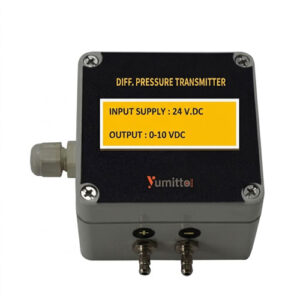


Differential Pressure Gauge: Complete Guide to Measurement, Applications and Selection
A Differential Pressure Gauge is a pressure-measuring instrument designed to measure the difference between two pressure points within a system. It helps operators monitor airflow, filter conditions, pressure balance, ventilation performance, cleanroom pressure, and industrial processes. Differential pressure measurement is widely used across HVAC systems, air handling units, cleanrooms, manufacturing facilities, laboratories, and industrial environments where maintaining a specific pressure relationship is important.
Differential Pressure Gauge
- A Differential Pressure Gauge measures the pressure difference between two separate points rather than measuring absolute or single-line pressure.
- The instrument receives pressure from a high-pressure port and a low-pressure port.
- The difference between these two pressures is displayed through a mechanical or digital indication.
- It can help identify changes in airflow, filter loading, duct pressure, and room-to-room pressure relationships.
- HVAC professionals commonly use differential pressure gauges to monitor air systems and ventilation equipment.
- Industrial users can apply them to process monitoring and equipment condition assessment.
- Cleanroom operators can use differential pressure measurement to monitor pressure relationships between controlled areas.
- The appropriate gauge range should be selected according to the expected differential pressure of the application.
DP Gauge
- A DP Gauge is a commonly used abbreviation for Differential Pressure Gauge.
- It is designed to provide a direct indication of pressure difference between two connection points.
- DP gauges are available in mechanical and digital configurations.
- They can be installed on HVAC ducts, filter housings, air handling equipment, and industrial systems.
- A DP Gauge can help operators identify abnormal pressure changes.
- Increasing differential pressure across a filter may indicate accumulation of dust or particulate matter.
- Pressure readings can also help technicians evaluate ventilation and airflow conditions.
- Selection should consider pressure range, connection type, installation conditions, and required accuracy.
Differential Pressure Meter
- A Differential Pressure Meter measures the difference between pressure at two locations.
- It can be used for monitoring air pressure in ducts, rooms, equipment, and process systems.
- Differential pressure meters may provide analog or digital readings depending on the instrument design.
- Digital versions can offer easier numerical interpretation during inspections.
- The instrument can support HVAC commissioning and maintenance activities.
- It can also be useful for monitoring pressure drops across filters and other components.
- Proper tubing connections are essential for obtaining meaningful differential pressure measurements.
- The measuring range should match the expected operating conditions of the system.
Differential Pressure Indicator
- A Differential Pressure Indicator provides a visible indication of the pressure difference between two points.
- It can help operators understand whether a system is operating within an expected pressure range.
- Indicators are useful where continuous observation of pressure difference is required.
- They can be installed near filters, fans, ducts, cleanrooms, or air handling equipment.
- Pressure indication can support routine maintenance and troubleshooting.
- A change in differential pressure may indicate restricted airflow or increased resistance.
- In clean environments, pressure indication can assist with monitoring pressure relationships between controlled areas.
- The instrument should be installed according to the manufacturer’s recommended orientation and connection method.
Digital Differential Pressure Gauge
- A Digital Differential Pressure Gauge displays pressure difference electronically.
- Digital displays can make readings easier to interpret compared with traditional analog scales.
- Depending on the model, digital instruments may support additional features such as selectable units or electronic outputs.
- They can be useful for HVAC monitoring and industrial measurement.
- Digital instruments are suitable where numerical readings are preferred.
- They can support maintenance teams during inspection and troubleshooting.
- The required pressure range should be considered before selecting a digital model.
- Environmental conditions such as temperature, humidity, vibration, and dust should also be evaluated.
Differential Pressure Monitor
- A Differential Pressure Monitor is used when pressure difference needs to be observed continuously or periodically.
- It can help identify changes in operating conditions.
- HVAC systems can use pressure monitoring to assess filter loading and airflow conditions.
- Cleanrooms can use differential pressure monitoring to maintain pressure relationships between areas.
- Industrial systems may use pressure monitoring as part of equipment and process supervision.
- Monitoring pressure changes can help maintenance personnel identify potential issues earlier.
- Some monitoring systems can be integrated with building management or control systems.
- The appropriate monitoring method depends on the application and required level of automation.
Differential Pressure Instrument
- A Differential Pressure Instrument is designed specifically to measure or indicate pressure differences.
- It can be used in applications where pressure balance is an important operating parameter.
- HVAC, pharmaceutical, laboratory, manufacturing, and industrial environments can require differential pressure measurement.
- The instrument can monitor pressure across filters, ducts, rooms, and equipment.
- Mechanical instruments provide direct local indication.
- Electronic instruments can provide additional monitoring or integration capabilities where supported.
- Installation should prevent leaks and incorrect pressure-port connections.
- Regular inspection helps maintain reliable measurement performance.
Pressure Differential Gauge
- A Pressure Differential Gauge measures the difference between a higher-pressure side and a lower-pressure side.
- It is commonly used for air and low-pressure applications.
- HVAC technicians can use it to observe pressure drops across filters and ventilation components.
- Industrial users can apply it to suitable process and equipment monitoring applications.
- The gauge range should be selected so normal operating pressure falls within the useful measurement area.
- Incorrect range selection can make readings difficult to interpret.
- Pressure tubing should be connected correctly to the high and low ports.
- Routine checks can help identify damaged tubing, blocked ports, or abnormal pressure conditions.
Differential Pressure Measuring Gauge
- A Differential Pressure Measuring Gauge provides a practical method for measuring pressure differences between two points.
- It can be used for HVAC ductwork and air handling systems.
- Filter monitoring is another common application.
- The gauge can help maintenance personnel observe pressure drop across filtration equipment.
- Increasing pressure differential can indicate increasing resistance to airflow.
- Cleanroom applications can use pressure measurements to observe pressure relationships between adjacent spaces.
- Industrial applications depend on the pressure range, media, temperature, and compatibility of the selected instrument.
- Correct installation and calibration practices are important for dependable measurements.
Magnehelic Differential Pressure Gauge
- A Magnehelic Differential Pressure Gauge is a well-known type of mechanical differential pressure indicator used for low-pressure air and gas measurement.
- It is commonly associated with HVAC and air-handling applications.
- Such gauges can be used to observe pressure differences across filters, ducts, and ventilation components.
- They provide local visual pressure indication without requiring a complex electronic display.
- Filter monitoring is one of the common applications for this type of gauge.
- Cleanroom pressure monitoring can also use suitable low-pressure differential gauges.
- The specific measurement range should match the application.
- Users should verify the instrument’s technical specifications before selecting it for a particular installation.
Differential Pressure Gauge For HVAC Systems
- A Differential Pressure Gauge For HVAC Systems can help technicians monitor pressure conditions within heating, ventilation, and air-conditioning installations.
- It can be installed across filters to observe pressure drop.
- It can help monitor pressure differences within air ducts and ventilation sections.
- Air handling units can use differential pressure measurement as part of maintenance procedures.
- Changes in pressure can indicate altered airflow resistance.
- The gauge can support troubleshooting when ventilation performance changes.
- Proper tubing arrangement is important for accurate differential measurement.
- HVAC operators should select the gauge according to the expected pressure range and operating environment.
Differential Pressure Gauge For Clean Rooms
- A Differential Pressure Gauge For Clean Rooms can help monitor pressure relationships between controlled environments.
- Cleanrooms may require pressure differences to support controlled airflow between adjacent spaces.
- A local gauge allows personnel to observe the pressure relationship at the installation point.
- Pharmaceutical and laboratory facilities can use differential pressure measurement as part of environmental monitoring.
- Pressure readings can support routine operational checks.
- The selected instrument should be compatible with the cleanroom’s environmental and installation requirements.
- Installation should minimize leakage and maintain proper pressure-port connections.
- Facility procedures should define acceptable pressure ranges according to the specific application.
Differential Pressure Gauge For AHU
- A Differential Pressure Gauge For AHU is useful for monitoring pressure differences associated with air handling units.
- AHUs contain filters, fans, coils, and airflow pathways where pressure changes can occur.
- Differential pressure measurement can help maintenance teams observe pressure drops across filtration stages.
- A rising filter pressure drop may indicate increasing airflow resistance.
- The gauge can support preventive maintenance decisions.
- It can also help technicians investigate abnormal airflow conditions.
- Correct connection of high- and low-pressure sides is essential.
- The selected pressure range should correspond with the AHU’s operating conditions.
Differential Pressure Gauge For Filter Monitoring
- A Differential Pressure Gauge For Filter Monitoring helps users observe pressure drop across filtration equipment.
- Filters create resistance to airflow, and this resistance can increase as the filter collects particles.
- Monitoring pressure difference can provide an indication of changing filter conditions.
- HVAC filters are common applications for differential pressure measurement.
- Industrial filtration systems may also require suitable differential pressure monitoring.
- Maintenance teams can use pressure readings as one factor when evaluating filter replacement requirements.
- The gauge should be installed with pressure connections positioned correctly across the filter.
- Actual replacement criteria should follow the equipment manufacturer’s and facility’s maintenance procedures.
Differential Pressure Gauge For Air Ducts
- A Differential Pressure Gauge For Air Ducts can measure pressure difference between two duct locations.
- It can help technicians evaluate pressure conditions within ventilation systems.
- Differential pressure measurement may support airflow troubleshooting.
- The gauge can be connected through suitable pressure tubing and ports.
- Duct pressure monitoring can assist during HVAC commissioning and maintenance.
- It can also help identify unusual pressure drops or resistance within a ventilation path.
- The pressure range should match the expected duct pressure conditions.
- Proper installation reduces the possibility of misleading readings caused by leakage or incorrect connections.
Differential Pressure Gauge For Ventilation Systems
- A Differential Pressure Gauge For Ventilation Systems provides local measurement of pressure differences within ventilation equipment and duct networks.
- It can help monitor pressure conditions across filters and other airflow components.
- Ventilation technicians can use differential pressure readings during inspections.
- Pressure changes may indicate altered airflow resistance or equipment conditions.
- The gauge can support preventive maintenance activities.
- Commercial buildings, industrial facilities, laboratories, and controlled environments may require differential pressure monitoring.
- Instrument selection should consider pressure range and environmental conditions.
- Correct tubing installation is essential for reliable pressure measurement.
Differential Pressure Gauge For Industrial Applications
- A Differential Pressure Gauge For Industrial Applications can support pressure monitoring across suitable equipment and process systems.
- Industrial applications may involve filters, ventilation systems, dust collection equipment, and process air.
- Differential pressure readings can help operators observe changes in system resistance.
- Maintenance teams can use pressure measurements during equipment inspections.
- The appropriate instrument depends on the measured medium and operating conditions.
- Pressure range, temperature, connection arrangement, and material compatibility should be evaluated.
- Industrial environments may require instruments designed for specific environmental conditions.
- Technical specifications should always be reviewed before installation.
Digital Differential Pressure Gauge For HVAC
- A Digital Differential Pressure Gauge For HVAC provides electronic pressure-difference readings for heating, ventilation, and air-conditioning applications.
- Digital displays can simplify numerical pressure reading.
- The instrument can support filter pressure-drop monitoring.
- It can also be used for suitable duct and air handling measurements.
- Digital measurement can be useful during HVAC testing and commissioning.
- Depending on the model, additional output or communication features may be available.
- Users should verify available functions before selecting a specific device.
- The pressure range should be appropriate for the HVAC application.
Differential Pressure Gauge For Cleanroom Monitoring
- A Differential Pressure Gauge For Cleanroom Monitoring helps facilities observe pressure differences between controlled areas.
- Cleanroom pressure relationships can be important for maintaining intended airflow direction.
- Local pressure indication can support routine facility checks.
- Pharmaceutical, healthcare, laboratory, and manufacturing environments may use differential pressure measurement.
- The gauge can be positioned where personnel can easily observe the reading.
- Installation should maintain proper pressure sensing between the relevant spaces.
- The required pressure range depends on the facility’s design and operating requirements.
- Monitoring procedures should follow the facility’s established environmental-control protocols.
Differential Pressure Gauge For Air Handling Units
- A Differential Pressure Gauge For Air Handling Units can help monitor pressure differences within AHU airflow paths.
- It is particularly useful for observing pressure drops across filters.
- Pressure measurement can assist maintenance teams in evaluating airflow resistance.
- The gauge can provide a simple local indication near the monitored component.
- It may support troubleshooting when an AHU experiences changes in airflow performance.
- Proper pressure tubing and connection points are essential.
- The instrument should be selected according to the expected differential pressure.
- Regular inspection can help maintain dependable measurement performance.
Differential Pressure Gauge India
- Differential Pressure Gauge India searches commonly relate to instruments used across HVAC, cleanroom, industrial, and air-handling applications.
- Indian facilities may require differential pressure gauges for different operating environments.
- HVAC contractors can use suitable gauges for filter and duct pressure monitoring.
- Pharmaceutical and laboratory facilities may require cleanroom pressure monitoring.
- Industrial users can require pressure measurement for ventilation and process applications.
- Product selection should be based on technical requirements rather than location alone.
- Users should review pressure range, accuracy, connections, construction, and application compatibility.
- A suitable supplier can help identify the appropriate instrument for the intended installation.
Differential Pressure Gauge Supplier India
- A Differential Pressure Gauge Supplier India can provide instruments for HVAC, industrial, cleanroom, and ventilation applications.
- Suppliers may offer different pressure ranges and instrument configurations.
- Buyers should communicate the required application before selecting a gauge.
- Important requirements can include measurement range and connection arrangement.
- Filter monitoring and cleanroom applications may require different instrument configurations.
- Digital and mechanical options can serve different monitoring requirements.
- Technical documentation should be reviewed before purchase and installation.
- Reliable product support can help with application selection and maintenance requirements.
Differential Pressure Gauge Manufacturer India
- A Differential Pressure Gauge Manufacturer India can develop or supply instruments designed for pressure-difference measurement.
- Manufacturers may offer products for HVAC and industrial applications.
- Buyers should evaluate technical documentation and product specifications.
- Measurement range is an important factor in gauge selection.
- Construction and pressure connection requirements should match the intended installation.
- Applications involving air, ventilation, filtration, and cleanroom monitoring may require different configurations.
- Manufacturers may also provide technical guidance for product selection.
- Users should confirm product specifications before deployment in critical applications.
Differential Pressure Gauge Dealers India
- Differential Pressure Gauge Dealers India can help customers source suitable pressure measurement instruments for local installations.
- Dealers may serve HVAC contractors, industrial companies, facility-management teams, and engineering projects.
- Buyers should provide application details before selecting a model.
- Required information can include pressure range, mounting requirements, and connection type.
- Dealers can help identify available product configurations.
- Filter monitoring and duct pressure applications may require low-pressure measurement ranges.
- Cleanroom installations may have specific environmental and monitoring requirements.
- Product documentation should be checked before final selection.
Differential Pressure Gauge Supplier Pan India
- A Differential Pressure Gauge Supplier Pan India can support customers across different regions with pressure measurement products.
- Differential pressure gauges can be used in HVAC, cleanrooms, ventilation, filtration, and industrial applications.
- Pan-India supply can be useful for multi-location facilities and engineering projects.
- Buyers should specify the application and required pressure range.
- Technical specifications should be reviewed before purchase.
- Proper installation is important for dependable differential pressure measurement.
- Suppliers with application knowledge can help customers identify suitable configurations.
- After-sales support and documentation can also be considered when selecting a supplier.
How Does a Differential Pressure Gauge Work?
- A differential pressure gauge receives pressure from two separate points.
- One connection is generally identified as the high-pressure side.
- The other connection is generally identified as the low-pressure side.
- The instrument responds to the difference between these pressures.
- Mechanical gauges may use a sensing element that moves in response to differential pressure.
- Digital instruments convert the measured pressure difference into an electronic reading.
- The displayed value represents the pressure difference between the two measurement points.
- Correct high-side and low-side connections are essential for meaningful readings.
Why Is Differential Pressure Measurement Important?
- Differential pressure measurement can reveal changes that are not obvious from single-point pressure readings.
- It can help identify increasing resistance across filters.
- It can support monitoring of ventilation and airflow conditions.
- It can help maintain pressure relationships in controlled environments.
- It can support HVAC commissioning and maintenance.
- It can provide useful information during troubleshooting.
- It can help operators observe system changes over time.
- It provides a practical measurement parameter for many air-handling applications.
Applications of Differential Pressure Gauges
- HVAC filter monitoring is a common application.
- Air handling unit pressure monitoring is another important use.
- Cleanroom pressure monitoring can help observe pressure relationships between spaces.
- Air duct pressure measurement can support ventilation maintenance.
- Industrial filtration systems can use pressure-drop measurement.
- Laboratories can use suitable instruments for controlled environmental applications.
- Pharmaceutical facilities may use differential pressure monitoring in controlled areas.
- Commercial buildings can use differential pressure instruments within HVAC systems.
How to Select a Differential Pressure Gauge
- Determine the expected minimum and maximum differential pressure.
- Select a gauge range appropriate for the operating conditions.
- Identify whether analog or digital indication is required.
- Check the pressure connection arrangement.
- Consider the measured medium and its compatibility with the instrument.
- Evaluate operating temperature and environmental conditions.
- Consider whether local indication or additional output functionality is required.
- Review manufacturer specifications before installation.
- Select an instrument specifically suited to the intended HVAC, cleanroom, or industrial application.
Differential Pressure Gauge Maintenance
- Inspect pressure tubing regularly for cracks, disconnection, or blockage.
- Check the gauge for physical damage.
- Verify that high- and low-pressure connections remain correctly installed.
- Compare readings against known operating conditions when appropriate.
- Keep connection points clean and unobstructed.
- Follow manufacturer recommendations for calibration or verification.
- Investigate unexpected pressure changes rather than assuming they indicate filter loading.
- Maintain installation records where required by the facility.
Benefits of Using a Differential Pressure Gauge
- Provides direct measurement of pressure difference.
- Supports HVAC system monitoring.
- Helps observe filter pressure drop.
- Supports cleanroom pressure monitoring.
- Assists ventilation troubleshooting.
- Provides useful information for preventive maintenance.
- Can be available in mechanical and digital configurations.
- Supports monitoring of suitable industrial applications.
- Helps technicians understand changes in airflow resistance.
Differential Pressure Gauge vs Pressure Gauge
- A conventional pressure gauge generally measures pressure relative to a reference such as atmospheric pressure.
- A differential pressure gauge compares pressure at two separate points.
- Differential measurement is particularly useful when pressure difference is the parameter of interest.
- Filter monitoring is a common example.
- A pressure gauge may show pressure at one point.
- A differential pressure gauge can show the pressure drop across a filter or component.
- The correct instrument depends on the measurement requirement.
- Users should identify whether they need single-point pressure or pressure-difference measurement before purchasing.
FAQs About Differential Pressure Gauge
What is a Differential Pressure Gauge?
- A Differential Pressure Gauge measures the difference between pressure at two separate points.
- It is commonly used for HVAC, filtration, ventilation, cleanroom, and industrial monitoring applications.
What is a DP Gauge used for?
- A DP Gauge can be used to monitor pressure differences across filters, ducts, air handling equipment, and controlled spaces.
- It can support maintenance and troubleshooting.
Where are differential pressure gauges used?
- They are commonly used in HVAC systems, air handling units, cleanrooms, laboratories, industrial facilities, ventilation systems, and filtration equipment.
Why is differential pressure important for filter monitoring?
- Pressure drop across a filter can increase as airflow resistance changes.
- Monitoring differential pressure can provide useful information about changing filter conditions.
Can a differential pressure gauge be used for HVAC?
- Yes, suitable differential pressure gauges are commonly used for HVAC applications.
- They can monitor filters, ducts, AHUs, and ventilation-related pressure differences.
What is the difference between a pressure gauge and a differential pressure gauge?
- A pressure gauge generally measures pressure at one point relative to a reference.
- A differential pressure gauge measures the difference between two pressure points.
Is a digital differential pressure gauge better than an analog gauge?
- The appropriate choice depends on the application.
- Digital gauges can provide numerical readings, while mechanical gauges can provide direct local indication.
- Selection should be based on application requirements.
How should a differential pressure gauge be installed?
- Connect the high-pressure and low-pressure sides to the correct measurement points.
- Use suitable pressure tubing and follow the manufacturer’s installation instructions.
Can differential pressure gauges be used in cleanrooms?
- Yes, suitable instruments can be used to monitor pressure relationships between cleanroom areas.
- The selected gauge should match the facility’s pressure range and environmental requirements.
How do I choose the correct differential pressure gauge?
- Consider the required pressure range, application, measured medium, connection type, environmental conditions, indication type, and required measurement performance.
- Always review the manufacturer’s technical specifications.
Choose Yumitto for Differential Pressure Monitoring Solutions
Yumitto provides environmental monitoring and measurement solutions designed for applications involving temperature, humidity, pressure, air quality, and controlled environments.
- Explore suitable Differential Pressure Gauge solutions for HVAC, cleanroom, ventilation, and industrial monitoring requirements.
- Evaluate the required measurement range and application before selecting the appropriate instrument.
- Contact Yumitto for product information, technical specifications, application guidance, and suitable differential pressure monitoring solutions.
- Visit Yumitto to explore related environmental monitoring products for HVAC, cleanroom, and building-management applications.
- Choose the measurement solution according to your system requirements and technical specifications.