



OIL & WATER DIFFERENTIAL PRESSURE SWITCH
Model
:
Y-DPS-L
Type
:
Pipeline
Display
:
–
Aplication
–

Specification

Ordering Guide


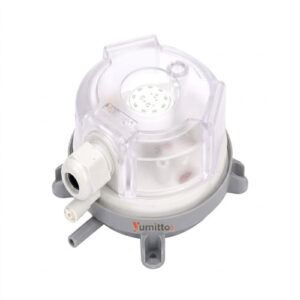
Oil & Water Differential Pressure Switch: Complete Guide for Industrial Pressure Monitoring
An Oil & Water Differential Pressure Switch is an important pressure monitoring device used to detect differences in pressure between two points in systems that handle oil, water, hydraulic fluids, filtration processes, pumps, HVAC equipment, and industrial fluid applications. By comparing upstream and downstream pressure, an Oil & Water Differential Pressure Switch can identify changes in system conditions and activate an electrical switching output when a preset differential pressure is reached. This makes the device useful for filter monitoring, pump protection, flow-related applications, fluid system control, and maintenance indication. Properly selected differential pressure equipment can help operators monitor equipment performance and identify conditions that may require inspection or servicing.
Oil & Water Differential Pressure Switch
- An Oil & Water Differential Pressure Switch detects the pressure difference between two separate pressure points in a fluid system.
- The device compares pressure at the high-pressure and low-pressure connections.
- When the differential pressure reaches the configured set point, the switch changes its electrical contact state.
- An Oil & Water Differential Pressure Switch can therefore be used to trigger alarms, control equipment, or provide maintenance signals.
- The device is useful in systems where monitoring the difference between two pressure points is more meaningful than measuring pressure at only one location.
- Applications can include filtration systems, pumps, water treatment equipment, HVAC systems, hydraulic circuits, and industrial processes.
- The correct switch should be selected according to fluid compatibility, pressure range, differential pressure range, temperature, connection type, and electrical requirements.
- An Oil & Water Differential Pressure Switch can provide a simple and effective method of monitoring changing pressure conditions.
Differential Pressure Switch
- A Differential Pressure Switch operates by sensing the pressure difference between two points.
- Unlike a conventional pressure switch, it responds to differential pressure rather than pressure at a single port.
- A Differential Pressure Switch can be used for filter clogging detection, airflow monitoring, pump systems, and fluid process applications.
- The switching point can generally be configured according to the requirements of the application.
- In fluid systems, an Oil & Water Differential Pressure Switch can provide a switching signal when the pressure difference reaches a specified level.
- The output can be connected to an alarm, relay, controller, or automation system.
- Selection should consider both the normal operating differential and the maximum expected differential pressure.
- Correct sizing helps ensure reliable switching performance.
Oil Pressure Switch
- An Oil Pressure Switch is designed to monitor pressure conditions associated with oil or compatible fluids.
- Oil pressure switches can be used in lubrication, hydraulic, filtration, and industrial fluid systems.
- An Oil Pressure Switch generally responds to pressure at a particular point, while a differential pressure switch compares two pressure points.
- An Oil & Water Differential Pressure Switch can be useful when the difference between upstream and downstream oil pressure needs to be monitored.
- Fluid compatibility should always be verified before selecting a pressure switch.
- Temperature and viscosity can also affect application requirements.
- The pressure range should match the expected operating conditions.
- Correct electrical specifications are also important for safe and reliable integration.
Water Pressure Switch
- A Water Pressure Switch monitors water pressure and changes its electrical state at a configured pressure condition.
- Water pressure switches can be used in pumps, water systems, treatment equipment, and industrial applications.
- A differential configuration compares pressure at two separate points in the water system.
- An Oil & Water Differential Pressure Switch can therefore be used when pressure loss across a water component needs to be detected.
- Filter monitoring is one common application where differential pressure can indicate increasing resistance to flow.
- Water compatibility, pressure range, temperature, and connection type should be checked before selection.
- The switch can provide a signal to a controller or alarm system.
- Appropriate selection helps maintain reliable system monitoring.
Differential Pressure Sensor
- A Differential Pressure Sensor measures the difference in pressure between two points and typically provides a continuous measurement signal.
- A sensor and a switch have different primary functions.
- A sensor generally provides a variable output, while a switch changes state when a defined threshold is reached.
- An Oil & Water Differential Pressure Switch is useful when a simple switching action is sufficient.
- A sensor may be preferred when continuous differential pressure data is required.
- Both technologies can be used in filtration, pumping, HVAC, and industrial applications.
- Selection depends on whether the system requires an on/off switching signal or continuous pressure information.
- Understanding this difference helps users select the appropriate measurement device.
Differential Pressure Controller
- A Differential Pressure Controller uses pressure information to regulate or control a system.
- Controllers can be integrated with valves, pumps, fans, or other equipment.
- A differential pressure switch can provide a threshold-based signal to a controller.
- An Oil & Water Differential Pressure Switch can therefore serve as an input for control or alarm functions.
- Controllers are useful when automated regulation is required.
- The switch provides a defined state based on the selected differential pressure set point.
- System designers should verify electrical compatibility between the switch and controller.
- The overall control strategy should determine whether a switch, sensor, or dedicated controller is most appropriate.
DP Pressure Switch
- A DP Pressure Switch is another common term for a differential pressure switch.
- DP stands for differential pressure.
- The device detects the difference between pressure at two ports.
- An Oil & Water Differential Pressure Switch can be considered a specialized DP pressure switching solution for compatible oil and water applications.
- DP switches are widely used for filter monitoring and equipment protection.
- They can also provide alarm signals when pressure differential reaches a defined limit.
- Set-point selection is important because an inappropriate threshold can cause premature switching or delayed detection.
- The device should always be selected according to the system’s pressure and fluid requirements.
Oil Water Pressure Switch
- An Oil Water Pressure Switch is used in systems involving oil, water, or compatible fluids.
- The exact construction and wetted materials determine whether a particular switch is suitable for a given fluid.
- An Oil & Water Differential Pressure Switch is designed to monitor the difference between two pressure points rather than only one pressure value.
- Applications may include pumps, filtration systems, hydraulic systems, and industrial equipment.
- Fluid compatibility should be confirmed before installation.
- Pressure and temperature ratings should also be checked.
- Correct port configuration is important for proper high-pressure and low-pressure connections.
- A suitable switch can provide dependable threshold-based monitoring.
Pressure Differential Switch
- A Pressure Differential Switch responds to a pressure difference between two points.
- It is often used where pressure loss indicates a change in system condition.
- Filter loading is a common example because pressure differential can increase as a filter becomes more restricted.
- An Oil & Water Differential Pressure Switch can detect this change and provide a switching signal.
- Pressure differential switches can also be used for pump monitoring and process control.
- The set point should be selected according to normal system operation.
- Electrical contact ratings should match the connected control circuit.
- Installation should follow the manufacturer’s recommendations.
Differential Pressure Monitor
- A Differential Pressure Monitor provides information about pressure differences within a system.
- Monitoring can be continuous or threshold-based depending on the equipment used.
- A differential pressure switch provides a simple threshold signal, while advanced monitoring systems may provide continuous values.
- An Oil & Water Differential Pressure Switch can act as a threshold monitor for fluid systems.
- Monitoring differential pressure can help operators identify filter loading, flow restrictions, or equipment changes.
- Data from monitoring devices can support maintenance planning.
- Remote monitoring can be achieved when the switching signal is integrated into a suitable control system.
- The monitoring approach should be selected according to application requirements.
Buy oil & water differential pressure switch
- Before you Buy oil & water differential pressure switch, identify the type of fluid used in the application.
- Determine the expected operating pressure and differential pressure range.
- Check the maximum allowable pressure and temperature.
- Confirm the required set-point range.
- Review port sizes and connection types.
- Check electrical contact ratings and switching requirements.
- Consider the required enclosure and environmental protection.
- When you Buy oil & water differential pressure switch, make sure the selected model is compatible with the actual operating conditions.
Oil & water differential pressure switch manufacturer
- An Oil & water differential pressure switch manufacturer designs and produces differential pressure switching equipment for fluid applications.
- Manufacturers may offer different pressure ranges, set-point configurations, connection types, and electrical options.
- Product documentation should clearly identify pressure ratings and compatible media.
- An Oil & Water Differential Pressure Switch manufacturer may provide technical information to support product selection.
- Manufacturing quality and product consistency can be important for industrial projects.
- Customers should review specifications, testing information, warranty, and technical support.
- For specialized applications, discussing the operating conditions with the manufacturer can help identify a suitable configuration.
- Selecting equipment based on documented specifications supports reliable operation.
Oil & water differential pressure switch supplier
- An Oil & water differential pressure switch supplier provides pressure switching products for industrial and commercial applications.
- Suppliers can assist with product availability, technical specifications, and purchasing.
- A professional supplier should be able to explain pressure range, set-point, connection, and electrical specifications.
- An Oil & Water Differential Pressure Switch supplier can support applications involving pumps, filtration, water systems, and industrial fluid equipment.
- Customers should provide complete application details when requesting a quotation.
- Availability and delivery requirements can be important for replacement or project applications.
- Warranty and after-sales technical support should also be considered.
- Choosing a supplier with suitable technical knowledge can simplify procurement.
Oil & water differential pressure switch for filtration systems
- An Oil & water differential pressure switch for filtration systems is used to monitor pressure loss across a filter.
- As a filter becomes increasingly restricted, the pressure difference between the upstream and downstream sides can change.
- An Oil & Water Differential Pressure Switch can be configured to respond when the differential reaches a selected threshold.
- This signal can indicate that inspection or filter maintenance may be required.
- Applications can include oil filtration, water filtration, hydraulic filtration, and process filtration.
- The switch should be selected according to the fluid, filter pressure range, and operating temperature.
- Correct set-point selection is important to avoid unnecessary alarms.
- Differential pressure monitoring can support preventive maintenance practices.
Oil & water differential pressure switch for pumps
- An Oil & water differential pressure switch for pumps can monitor pressure conditions around pumping systems.
- Differential pressure can provide useful information about system resistance and operating conditions.
- An Oil & Water Differential Pressure Switch may be used to trigger an alarm or control action when the pressure difference reaches a defined level.
- Pump applications can include water circulation, process fluids, hydraulic systems, and oil handling.
- The switch should be compatible with the pumped fluid.
- Operating pressure and pressure spikes should be considered during selection.
- Installation should ensure correct connection of the high-pressure and low-pressure ports.
- Properly configured switching can support equipment monitoring and maintenance.
Oil & water differential pressure switch for industrial applications
- An Oil & water differential pressure switch for industrial applications can be used across various fluid-handling systems.
- Industrial applications may include filtration equipment, pumps, hydraulic systems, water treatment, process machinery, and fluid circulation systems.
- An Oil & Water Differential Pressure Switch can provide a simple electrical signal when the pressure difference reaches the configured threshold.
- Industrial environments may require robust construction and suitable environmental protection.
- Temperature, vibration, contamination, and installation conditions should be considered.
- The switch’s pressure rating should exceed the expected operating conditions with appropriate engineering margin.
- Electrical contacts should be selected according to the connected control circuit.
- Regular inspection can help maintain reliable operation.
Oil & water differential pressure switch with adjustable set point
- An Oil & water differential pressure switch with adjustable set point allows users to configure the switching threshold according to application requirements.
- Adjustable settings can provide greater flexibility across different operating conditions.
- An Oil & Water Differential Pressure Switch with an adjustable set point can be useful when the required threshold may vary between applications.
- The set point should be configured according to the actual system requirements.
- Operators should avoid setting the threshold too close to normal operating fluctuations.
- Proper adjustment can help reduce nuisance switching.
- The adjustment mechanism should be protected against unintended changes where necessary.
- Calibration and verification procedures should follow the manufacturer’s recommendations.
Oil & water differential pressure switch for HVAC systems
- An Oil & water differential pressure switch for HVAC systems can be used in fluid-side applications involving heating, cooling, pumps, and filtration.
- HVAC systems commonly use water or water-based fluids in circulation and heat-transfer equipment.
- An Oil & Water Differential Pressure Switch can help monitor pressure differences across selected components.
- Applications may include pump circuits, filters, heat exchangers, and other fluid-handling equipment.
- The selected switch should be compatible with the system fluid and temperature.
- Pressure ratings should match the HVAC system requirements.
- Proper installation can help provide dependable pressure differential detection.
- Maintenance teams can use differential pressure signals as part of equipment monitoring.
Oil & water differential pressure switch for water treatment
- An Oil & water differential pressure switch for water treatment can monitor pressure differences across filtration and fluid-handling equipment.
- Water treatment systems often contain filters, pumps, membranes, and other components where pressure differential can be a useful operating indicator.
- An Oil & Water Differential Pressure Switch can provide a switching signal when a configured pressure difference is reached.
- This can support filter maintenance and process monitoring.
- Material compatibility is important because water treatment fluids can vary in composition.
- The switch should be selected according to pressure, temperature, and fluid characteristics.
- Correct installation across the monitored component is essential.
- Regular inspection can help maintain reliable system operation.
Oil & water differential pressure switch price in India
- Oil & water differential pressure switch price in India can vary based on pressure range, differential range, materials, set-point adjustment, connection type, electrical contacts, and other specifications.
- Specialized configurations may have different pricing from standard models.
- An Oil & Water Differential Pressure Switch designed for a demanding industrial application may require additional specifications.
- Buyers should compare the complete technical configuration when reviewing quotations.
- Accessories, installation, calibration, and commissioning may also influence the overall project cost.
- Warranty and technical support can be important considerations.
- Customers should provide application details when requesting an accurate quotation.
- Comparing products only on price may result in selecting a device that does not meet the required specifications.
Oil & water differential pressure switch supplier in India
- An Oil & water differential pressure switch supplier in India can provide pressure switching solutions for industrial and commercial fluid applications.
- Suppliers can support customers across different regions and industries.
- A supplier should provide clear technical specifications and product information.
- An Oil & Water Differential Pressure Switch supplier can help customers identify a suitable model based on pressure, fluid, temperature, and electrical requirements.
- Availability and delivery times may be important for industrial projects.
- Customers can also ask about replacement availability and technical support.
- A supplier with application knowledge can make the selection process more efficient.
- Buyers should verify all specifications before finalizing an order.
Oil & water differential pressure switch manufacturer in India
- An Oil & water differential pressure switch manufacturer in India can produce and supply differential pressure switches for Indian industrial requirements.
- Manufacturers may offer different configurations for water, oil, filtration, pumps, HVAC, and industrial systems.
- Product documentation should clearly state operating limits and compatibility.
- An Oil & Water Differential Pressure Switch manufacturer may also provide technical guidance for specific applications.
- Customers should evaluate manufacturing capabilities, quality processes, product consistency, and support.
- For projects requiring multiple units, consistent specifications can be important.
- Lead time and availability should be considered during project planning.
- Technical support can assist with installation and commissioning.
Oil & water differential pressure switch dealer in India
- An Oil & water differential pressure switch dealer in India can help customers source differential pressure switching equipment.
- Dealers may provide product availability and basic technical assistance.
- Before purchasing, customers should confirm the exact model and specifications.
- An Oil & Water Differential Pressure Switch dealer should provide information about pressure range, set point, connection, and electrical configuration.
- Warranty and support arrangements should also be checked.
- Dealers can be useful for replacement units and local procurement requirements.
- Customers should ensure that the selected product is suitable for the intended fluid.
- Proper technical matching is important for reliable operation.
Oil & water differential pressure switch price in India
- When comparing Oil & water differential pressure switch price in India, evaluate each product based on its complete specification.
- Pressure range and differential set-point range can affect pricing.
- Materials, connection type, electrical contacts, adjustable settings, and environmental protection may also influence cost.
- An Oil & Water Differential Pressure Switch for a specialized industrial application may require a different configuration from a basic fluid monitoring switch.
- Customers should consider installation and maintenance requirements.
- Warranty and technical support can contribute to overall ownership considerations.
- Application-specific quotations provide a more accurate basis for comparison.
- Selecting the correct technical configuration is important for long-term reliability.
Buy oil & water differential pressure switch online India
- Customers who want to Buy oil & water differential pressure switch online India should verify the technical specifications before ordering.
- Check fluid compatibility and pressure ratings.
- Confirm the required differential pressure range and set point.
- Verify the connection size and type.
- Check electrical contact configuration and rating.
- An Oil & Water Differential Pressure Switch should be compatible with the connected controller or alarm system.
- Review operating temperature and environmental requirements.
- Confirm warranty, delivery, documentation, and technical support before completing the purchase.
How Does an Oil & Water Differential Pressure Switch Work?
- An Oil & Water Differential Pressure Switch contains pressure-sensing elements connected to two pressure points.
- One connection is generally exposed to the higher pressure side and the other to the lower pressure side.
- The mechanism responds to the difference between these pressures.
- When the differential pressure reaches the configured switching threshold, the electrical contacts change state.
- The switching signal can be connected to a controller, relay, alarm, or other automation equipment.
- When the differential falls back below the relevant switching condition, the contacts may return to their previous state depending on the switch design.
- The exact switching and reset behavior depends on the product configuration.
- Proper set-point selection is important for dependable operation.
Applications of Oil & Water Differential Pressure Switch
- Filtration systems: Detecting increasing pressure loss across filters.
- Pump systems: Monitoring differential pressure in fluid circulation systems.
- Water treatment: Monitoring filters and fluid-handling equipment.
- HVAC systems: Monitoring pressure differences in water-based circulation systems.
- Hydraulic systems: Monitoring pressure conditions in compatible hydraulic circuits.
- Industrial processes: Providing threshold-based pressure monitoring.
- Oil filtration: Detecting differential pressure changes across oil filters.
- Process equipment: Supporting equipment protection and maintenance signals.
- Fluid circulation: Monitoring pressure differences between selected system points.
Benefits of Using an Oil & Water Differential Pressure Switch
- Threshold-based monitoring: Provides a clear switching signal when a configured differential is reached.
- Simple integration: Can connect to relays, alarms, controllers, or automation systems.
- Filter monitoring: Helps identify increasing pressure loss across filtration components.
- Equipment monitoring: Can provide useful information about pump and fluid-system conditions.
- Maintenance support: Differential pressure changes can indicate conditions requiring inspection.
- Flexible applications: Suitable models can be used with compatible oil and water systems.
- Adjustable options: Some models provide configurable set points.
- Industrial usability: Appropriate configurations can support demanding industrial applications.
- Compact monitoring: Provides differential pressure switching without requiring a complex monitoring system.
Factors to Consider Before Selecting an Oil & Water Differential Pressure Switch
- Fluid compatibility: Confirm that wetted materials are compatible with the monitored fluid.
- Differential pressure range: Select a range suitable for normal and abnormal operating conditions.
- Maximum pressure: Verify the maximum pressure rating of the device.
- Temperature: Check the operating temperature range.
- Set point: Select a switching threshold appropriate for the application.
- Reset behavior: Review the switch differential or hysteresis characteristics.
- Electrical rating: Ensure contacts are suitable for the connected circuit.
- Connections: Verify port size and connection type.
- Environment: Consider humidity, dust, vibration, and other installation conditions.
- Maintenance: Review inspection and calibration requirements.
- Installation: Follow the manufacturer’s recommended mounting procedure.
Installation and Maintenance of Oil & Water Differential Pressure Switch
- Connect the high-pressure port to the appropriate upstream or higher-pressure point.
- Connect the low-pressure port to the appropriate downstream or lower-pressure point.
- Ensure all process connections are properly sealed.
- Avoid exceeding the rated pressure or temperature.
- Connect the electrical contacts according to the manufacturer’s wiring instructions.
- Configure the set point according to the system requirements.
- Verify switching operation during commissioning.
- Inspect connections periodically for leakage or damage.
- Check the switch when the monitored system is serviced.
- Keep maintenance records for critical applications.
- Replace the device if inspection identifies damage or performance issues beyond the available adjustment range.
Why Choose Yumitto for Differential Pressure Solutions?
- Yumitto provides measurement and pressure monitoring solutions for industrial and commercial applications.
- Customers can discuss their application requirements before selecting an Oil & Water Differential Pressure Switch.
- Product selection can be based on fluid type, pressure range, differential set point, temperature, connection, and electrical requirements.
- Yumitto can support applications involving filtration, pumps, HVAC systems, water treatment, and industrial fluid systems.
- Customers can request technical information to identify an appropriate configuration.
- Selecting the correct Oil & Water Differential Pressure Switch can help support reliable threshold-based pressure monitoring.
- Yumitto can be considered when sourcing differential pressure switching solutions for different fluid applications.
Frequently Asked Questions
What is an Oil & Water Differential Pressure Switch?
- An Oil & Water Differential Pressure Switch detects the pressure difference between two points in an oil or water system.
- It changes its electrical state when the differential pressure reaches a configured threshold.
What is the purpose of a differential pressure switch?
- A differential pressure switch provides a switching signal based on the difference between two pressure points.
- It can be used for filter monitoring, pump applications, equipment protection, and process control.
Can an Oil & Water Differential Pressure Switch be used for filtration?
- Yes, suitable models can be used to monitor pressure loss across compatible filtration systems.
- Increasing differential pressure may indicate that a filter requires inspection or maintenance, depending on the application.
What is the difference between a pressure switch and a differential pressure switch?
- A conventional pressure switch typically responds to pressure at one sensing point.
- A differential pressure switch compares pressure at two points and responds to the difference between them.
Can the set point be adjusted?
- Some models provide adjustable differential pressure set points.
- The adjustment range depends on the product configuration and should be selected according to application requirements.
How do I choose an Oil & Water Differential Pressure Switch?
- Consider fluid compatibility, pressure range, differential pressure range, temperature, set point, connection type, electrical rating, and environmental conditions.
- These factors help determine whether a particular switch is suitable for the application.
What affects oil and water differential pressure switch price in India?
- Pricing can depend on pressure range, materials, adjustment range, connections, electrical specifications, construction, and other product features.
- Application-specific requirements can also affect the final quotation.
Can an Oil & Water Differential Pressure Switch be used with pumps?
- Yes, suitable switches can be used in pump and fluid circulation applications.
- The pressure range and fluid compatibility should be verified before installation.
Does an Oil & Water Differential Pressure Switch require maintenance?
- Periodic inspection of connections, wiring, switching operation, and physical condition may be appropriate.
- Maintenance requirements depend on the application and manufacturer’s recommendations.
Where can I buy an Oil & Water Differential Pressure Switch in India?
- Customers can source these devices from suitable manufacturers, suppliers, and authorized dealers.
- Before purchasing, verify the pressure range, differential set point, fluid compatibility, connections, and electrical requirements.
Get the Right Oil & Water Differential Pressure Switch from Yumitto
-
- Reliable differential pressure monitoring can help operators understand changing conditions in filtration, pumping, HVAC, water treatment, and industrial fluid systems.
- The right Oil & Water Differential Pressure Switch can provide a dependable threshold-based signal for alarms, controls, and maintenance monitoring.
- Yumitto offers pressure measurement solutions for different industrial and commercial applications.
- Share your fluid type, operating pressure, differential pressure range, temperature, connection requirements, and electrical specifications with the Yumitto team.
- Get the appropriate Oil & Water Differential Pressure Switch for your application and support more reliable pressure monitoring.
- Contact Yumitto today to discuss your differential pressure monitoring requirements and find a suitable solution for your system.